IT Radix is a Managed IT Services provider based in New Jersey that delivers technology consulting and support. For an MSP that sets the standard for its own clients, maintaining a website that meets legal and inclusivity standards is a critical component of their brand reputation.
They needed to ensure their digital presence was fully compliant with the Americans with Disabilities Act (ADA) to ensure accessibility for all users and mitigate legal risk. Pronto’s Website Support team stepped in to help.
The Challenge: A “Failed” Accessibility Audit
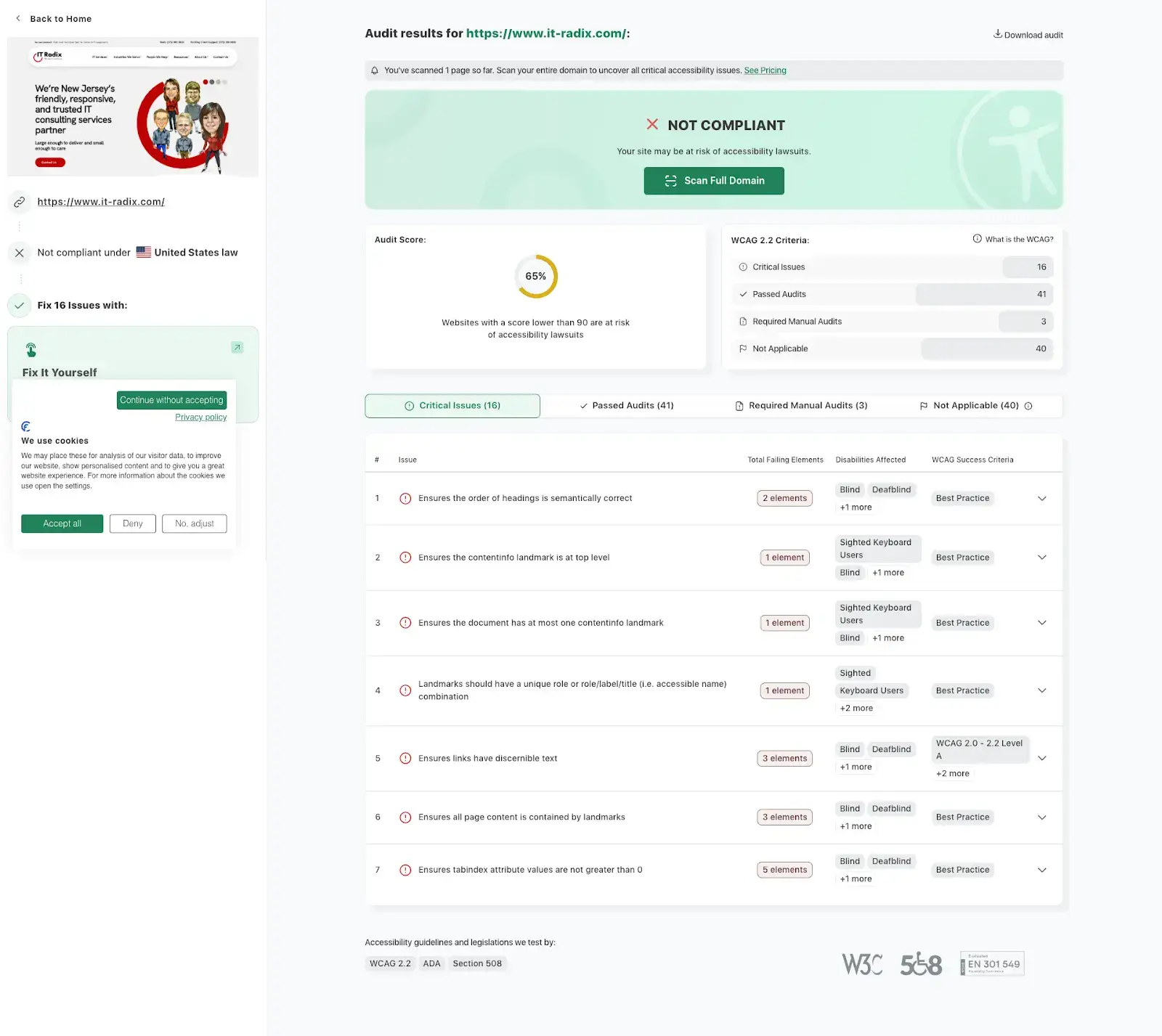
In late October 2025, IT Radix was contacted regarding potential ADA compliance gaps on their website. To validate these claims, the client utilized an independent auditing tool (adafreeaudit.com), which returned a “Failed” status.
The initial report painted a concerning picture:
Accessibility Score: 65%
Critical Issues: 16 flagged errors
The audit highlighted specific technical failures, including:
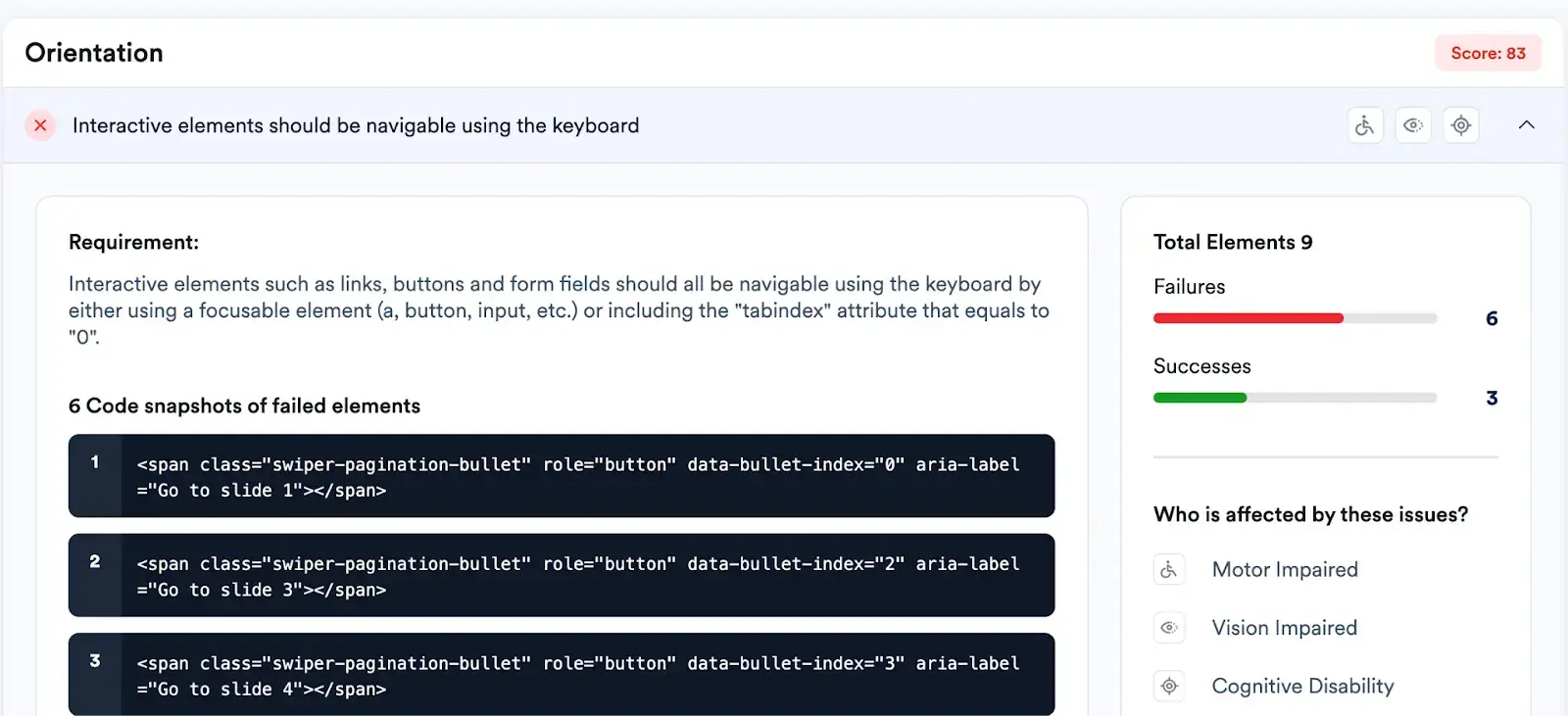
Navigation: Interactive elements, specifically the homepage slider, were not fully navigable via keyboard commands.
Visual Standards: Color contrast ratios in the menu and footer did not meet the required readability thresholds.
Code Semantics: Missing alt tags on images and improper heading hierarchies (H1-H6) created barriers for screen readers.
The Solution: A Strategic Remediation Plan
Pronto’s support team approached the project in two distinct phases: immediate code sanitation and complex component re-engineering.
Structural and Visual Sanitation The team first addressed the static code errors identified in the audit spreadsheet.
Semantic Repair: The team corrected heading hierarchies to ensure a logical flow for assistive technologies and added descriptive alt text to images.
Contrast Adjustment: Developers modified the CSS for the footer and navigation menus, adjusting font and background colors to meet WCAG contrast guidelines.
Solving the “Slider” Navigation Constraint The most persistent issue was the homepage carousel. The audit required that interactive elements should be fully navigable using the keyboard.
The existing slider (built on Swiper.js via Elementor) used a “roving tabindex,” meaning only the active slide was focusable. While often standard, strict audit tools flag this as a failure if users cannot tab through every pagination dot.
The Technical Obstacle: The developers initially attempted to force tabindex=”0″ on all bullets using custom JavaScript. However, the library continuously re-rendered the DOM during slide updates, resetting the values and breaking the fix.
The Strategic Fix: Recognizing that the existing widget was incompatible with the client’s strict compliance requirements, the team replaced the Elementor widget entirely. They implemented a new, accessible-first library that natively supported the required keyboard navigation patterns.
Slider showing team members — controllable by keyboard
The Result: From Liability to Asset
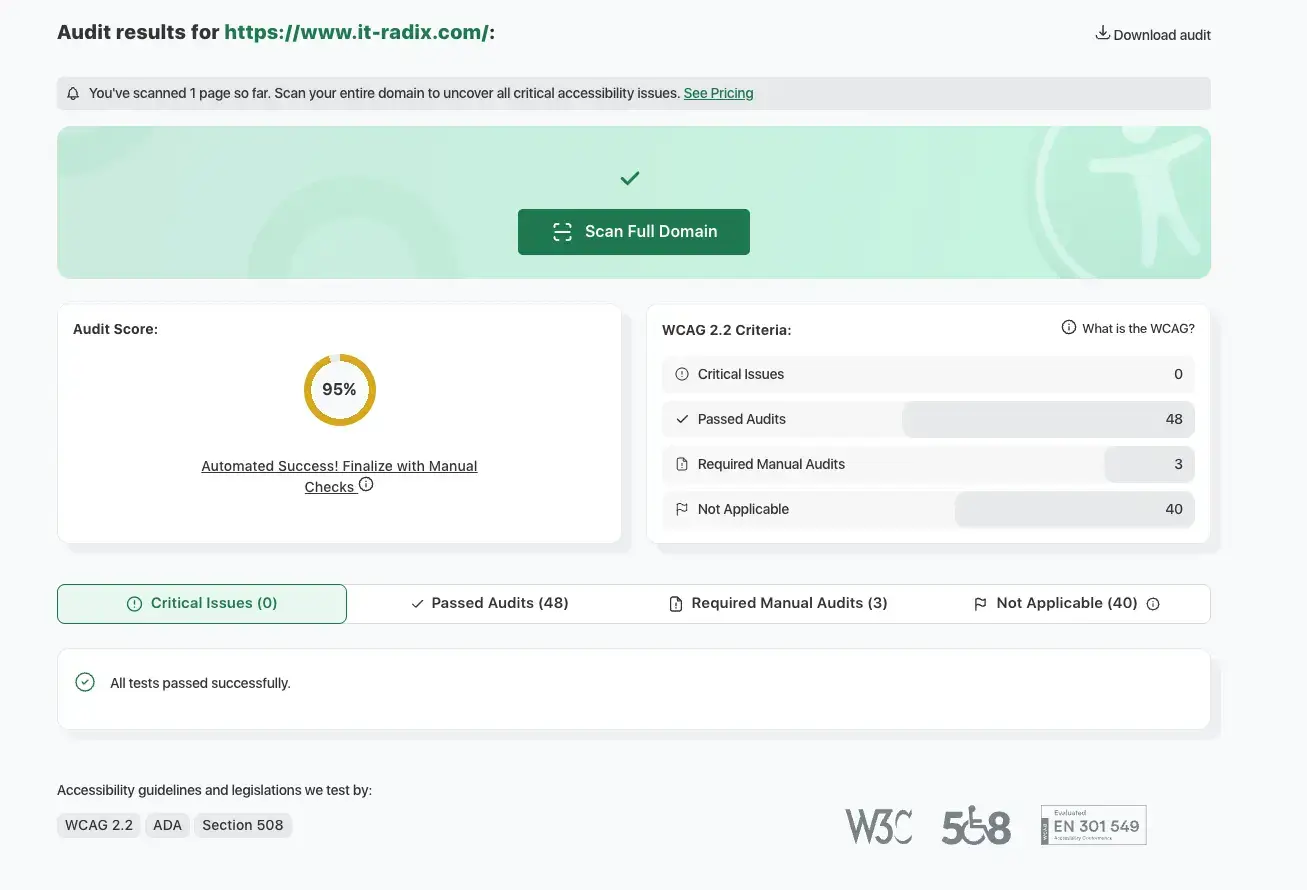
The remediation project successfully closed the compliance gap, validating the site against the same third-party tool that initially flagged it.
Score Improvement The website’s accessibility score jumped from 65% to 95%, clearing all 16 critical issues.
Full Navigability The “Orientation” and “Menu” errors were resolved, ensuring that users relying on keyboards and screen readers could navigate the entire site without barriers.
Client Satisfaction The successful audit provided IT Radix with the documentation needed to prove compliance.
“Making our website ADA compliant was a big task. I appreciate Boom's assistance. Great communication.”
Written by
Adam Selley
Head of WordPress Maintenance and Support Services